
About The John K. Bennett Memorial - Kappa Alpha Order
Much rich history has been sown in the fertile soil of Virginias famed Shenandoah Valley. While many towns of this valley have laid claim to immortality, many people consider the tiny, Blue Ridge mountain town of Lexington a small piece of heaven. This town, that witnessed much of the Civil War, is the epitome of heritage and tradition. It serves as the final resting place of Generals T. J. Stonewall Jackson and Robert E. Lee; it is the birthplace of famed Texas revolutionary Sam Houston; and it is the home of two great universities Washington and Lee University and the Virginia Military Institute (VMI). It also neighbors Natural Bridge, one of the Seven Natural Wonders of the World, which was surveyed by George Washington and once owned by Thomas Jefferson. Lexington was a college town even before the United States became a country. Founded in 1749, Augusta Academy would become Liberty Hall Academy in 1776. The school was renamed Washington College in George Washingtons honor after he contributed $50,000 worth of stock to the school in 1796. After the death of the schools most illustrious president, Robert E. Lee, the college became known as Washington and Lee University. In 1865, at the end of the bloodiest war our nation has ever seen, the two institutions were but shadows of their former selves. VMI had been burned nearly to the ground, and Washington College was severely damaged when it was used as Union barracks. With no money and no president, Washington College had somehow remained open throughout the war. During this time it served primarily as a preparatory school, with four professors teaching about forty boys who were too young to serve in the Confederate army. However, the schools trustees were determined to save their desperate college. On August 4, 1865, they met to discuss applying for a loan and the prospects for the colleges presidency. At that meeting, a board member rose and said that he had heard that General Lee was looking for a position that would allow him to earn a living for his family. The trustees immediately elected Lee as president contingent on his acceptance, of course. They offered him an annual salary of $1,500, and the use of a house and garden and a small percentage of the tuition. Everyone in the country knew that Lee could lead soldiers, but few remembered that he also had served as superintendent of the United States Military Academy at West Point. For Lee, the position in tiny Lexington was an opportunity to lead his people, not into battle, but into recovery. On August 31, 1865, Lee became the president of a school named for his mentor and his wifes grandfather, George Washington. I think it is the duty of every citizen, in the present condition of the country, to do all in his power to aid in the restoration of peace and harmony, he wrote to the trustees in his letter of acceptance. It is particularly incumbent of those charged with the instruction of the young to set them an example of submission to authority. Beset by the wars legacy of poverty, only 50 students were enrolled at the time of Lees inauguration. As word of his presence spread, others arrived, until finally, 146 young men had registered for the colleges first post-war session. Among those first students were three of KAs four founders, James Ward Wood, William Nelson Scott, and William Archibald Walsh. Founder Stanhope McClelland Scott, brother of William Nelson Scott, entered the colleges second postwar session in the spring semester of 1866.
About The Fund
The John K. Bennett Memorial Scholarship was established in 1967 in memory of John King Bennett, a former student in the College of Business and Public Administration. Scholarships will be awarded to full-time University of Maryland undergraduate students who are active members of the Beta Kappa Chapter, Kappa Alpha Order.
Meet Our Scholars
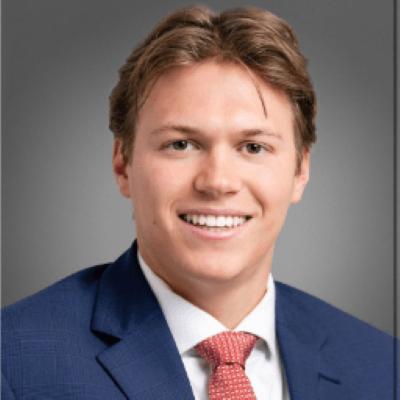
Franklin Wagner is a senior majoring in Finance at the Robert H. Smith School of Business. While at Maryland, Franklin joined the Kappa Alpha Order chapter. During his time in the chapter, he held leadership positions supporting the chapter's future success. In addition to his work for the fraternity, Franklin was a mentor in the Smith Investment Fund. Along with this, Franklin has interned at a boutique wealth management firm where he plans on working after graduation.
Franklin Wagner (2024 Scholar)
Past Scholars
Roberto Torres (2019 - 2022 Scholar)
Roberto Mateo Torres is a second semester, senior Finance major at the University of Maryland’s Robert H. Smith School of Business. He is a brother and former president of the Beta Kappa Chapter of the Kappa Alpha Order. Currently, Mateo is the founder and president of UMD’s chapter of the Hispanic Finance Association, a nationwide organization aimed at hel;ping undergraduate students land jobs in the financial services industry. Mateo will be pursuing a career in Investment Banking in New York City upon graduation in May of 2022. He hopes to have the chance to give back to his University and offer mentorship to his younger brothers and those who come after him at the University of Maryland.
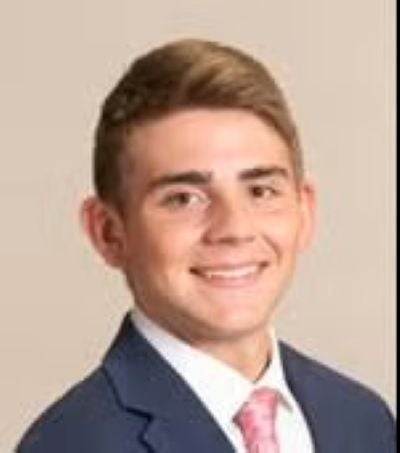
Ryan Hayes (2022 Scholar)
Tyler Villalobos (2019 - 2021 Scholar)
Nik Utzschneider (2018 Scholar)
Anthony Talentino (2018 Scholar)
I am currently serving as President of the Kappa Alpha Order Fraternity. Before that I served on the executive board of Kappa Alpha Order as Historian. Additionally, I currently serve on the Terpski Executive board, and am responsible for Partnership and Outreach. Terpski is the schools largest run student organization, with over 500 active members. Academically, I am majoring in Information Science, with a specialization in Data Analytics.
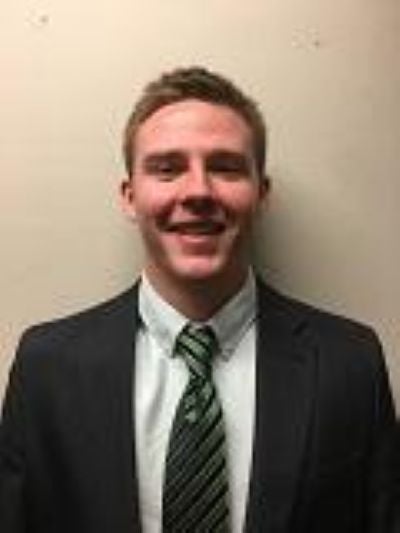
Braden Kern (2017 Scholar)
Jose Delgado (2016 Scholar)
Christian Stephenson Scholar